AI, Design,
and What Still Remains Human
AI is everywhere.
Every scroll through social media brings a new AI tool, a “game-changing” feature, or a headline predicting the end of traditional roles. For many of us, this constant noise doesn’t feel like progress. Instead, it feels overwhelming. At times, it even feels like standing in front of something too fast to fully understand, almost like a Stone-Age creative trying to make sense of a spaceship. Anxious, slightly lost, and afraid of being left behind.
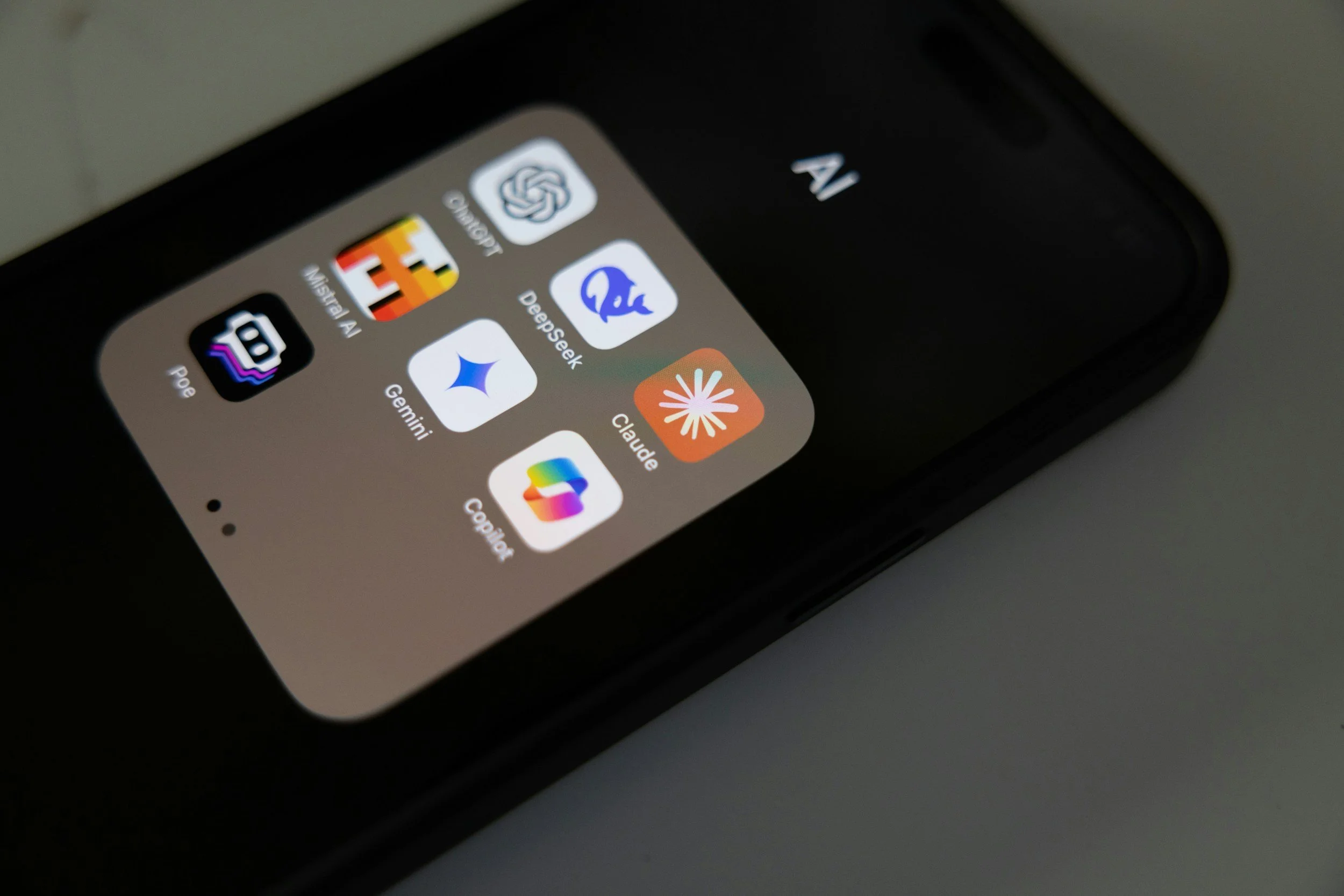
Photo by Solen Feyissa on Unsplash
I’ll admit, I had a moment where I needed to step away from all of it.
The constant “AI will change everything” narratives on LinkedIn and social media became too loud, and I needed space to reset. But after that initial emotional reaction, I shifted from panic to observation. Instead of just consuming the noise, I started paying attention: what tools are actually being used, and how are people really working with them?
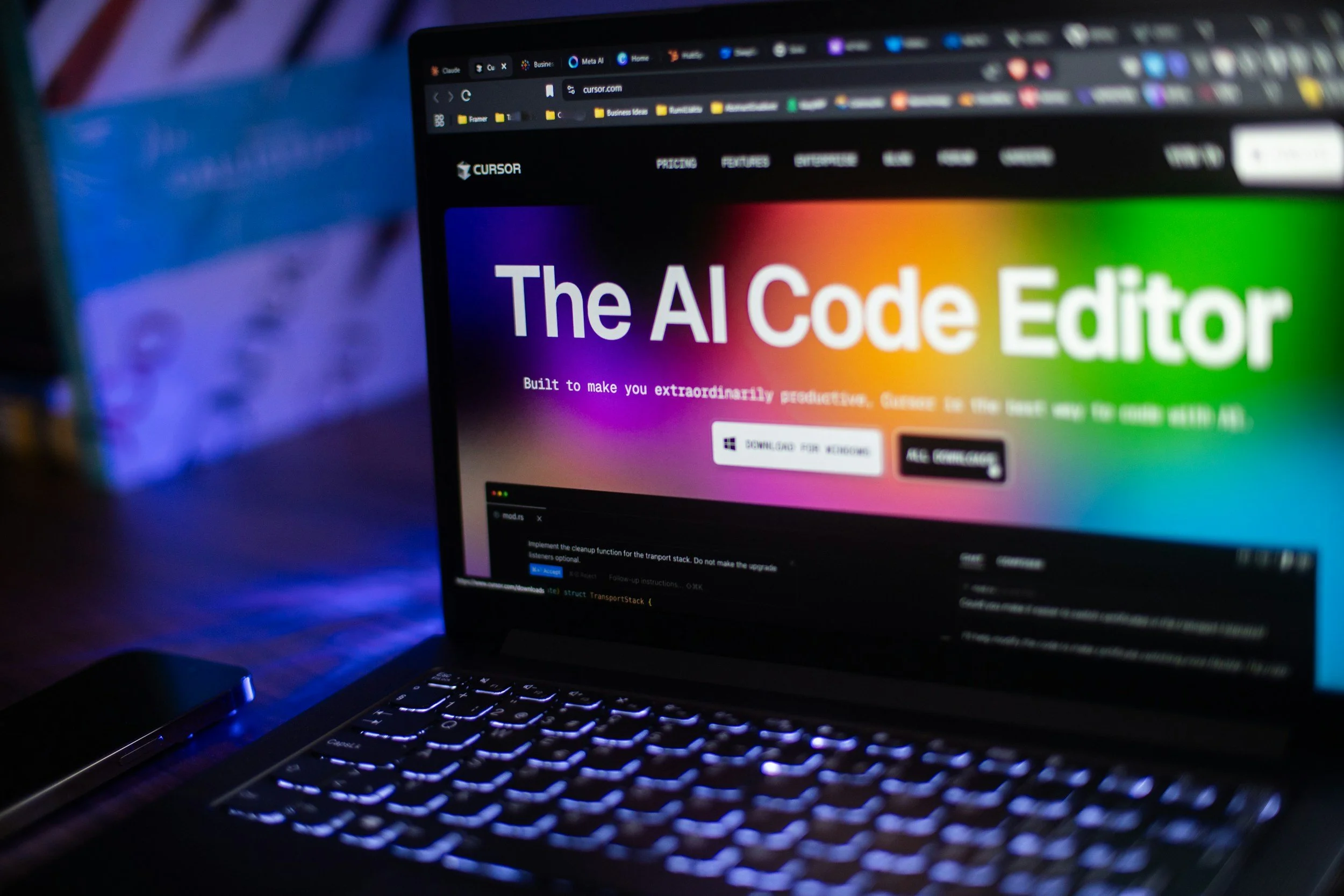
What I found is less dramatic than the headlines suggest. While some tools are designed for advanced users, many others are surprisingly accessible and beginner-friendly. Once you move past the “magic” impression, you start to see them for what they are: practical tools that support thinking and execution rather than replace it. Whether it’s using large language models like ChatGPT or Gemini to refine writing, or exploring tools like Lovable and Base 44 to build prototypes without coding, the barrier to experimenting with complex ideas has significantly lowered.
At this point, I started to realize something important: AI is not changing what design is, but where effort is spent inside the process.
Why AI Matters for Designers
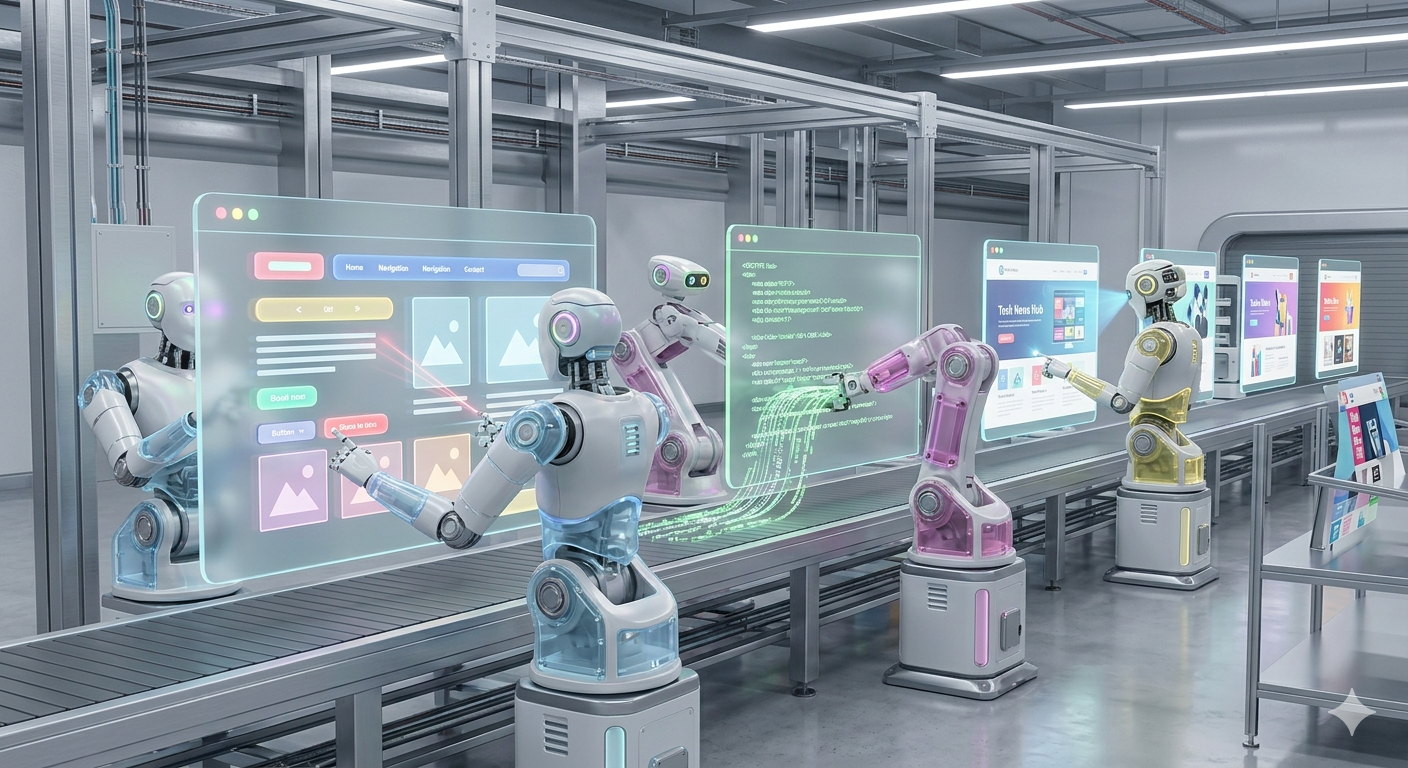
When AI lowers the barrier to entry, it becomes much easier for anyone to generate production-level outputs, whether that’s images, videos, or visual concepts. In a way, AI is increasingly absorbing the execution layer of creative work.
When AI-generated visuals first started spreading across the internet, I also found myself questioning what this meant for us, designers. The “end of design jobs” narrative felt loud and unavoidable. But as I explored further, my perspective began to shift.
Over the past years, the role of designers has already expanded significantly. We are no longer only focused on visuals; we are expected to understand business goals, user behavior, research insights, and sometimes even technical constraints. Designers have gradually moved closer to being strategic thinkers, not just visual executors.
At its core, design has always been a structured problem-solving process. The interface we eventually see is only the final layer of a much deeper system involving research, analysis, and decision-making.
This is where AI becomes meaningful.
Rather than replacing designers, AI acts more like a collaborator within the design process. It can help organize research, surface patterns, challenge assumptions, and offer alternative perspectives. In that sense, it functions less like a competitor and more like a thinking partner—helping us move through complexity more efficiently so we can focus on the parts of design that require judgment, context, and human understanding.
A Designer’s Workflow, Reimagined
In practice, AI has gradually changed parts of my workflow: not by replacing the design process, but by reducing repetitive work and helping me move through information more efficiently. However, at every stage, human judgment, interpretation, and contextual understanding remain essential.
During research and information synthesis, AI helps me process large amounts of data more efficiently. Instead of manually going through endless articles, tabs, and PDFs, I can use AI to summarize findings, organize information, identify patterns, and cross-reference sources. This significantly speeds up early exploration. However, AI can recognize patterns, but it does not fully understand context or meaning. That interpretation still depends on the designer.
During user interviews, AI-powered tools can handle transcription and summarization in real time. This reduces the need for constant note-taking and allows me to focus more fully on the conversation itself. I can pay closer attention to tone, hesitation, emotion, and body language, things that are not always visible in raw transcripts. AI handles the documentation; designers handle the empathy and interpretation. After interviews, AI can help cluster themes and summarize insights, but it is still the designer who decides what actually matters.
In competitor research, I often use AI as a collaborative thinking partner. It helps gather information quickly, but more importantly, it allows me to question my own assumptions. At the same time, I’ve learned not to treat AI outputs as the truth. The value comes not from accepting its answers, but from creating a dialogue between machine-generated perspectives and human judgment.
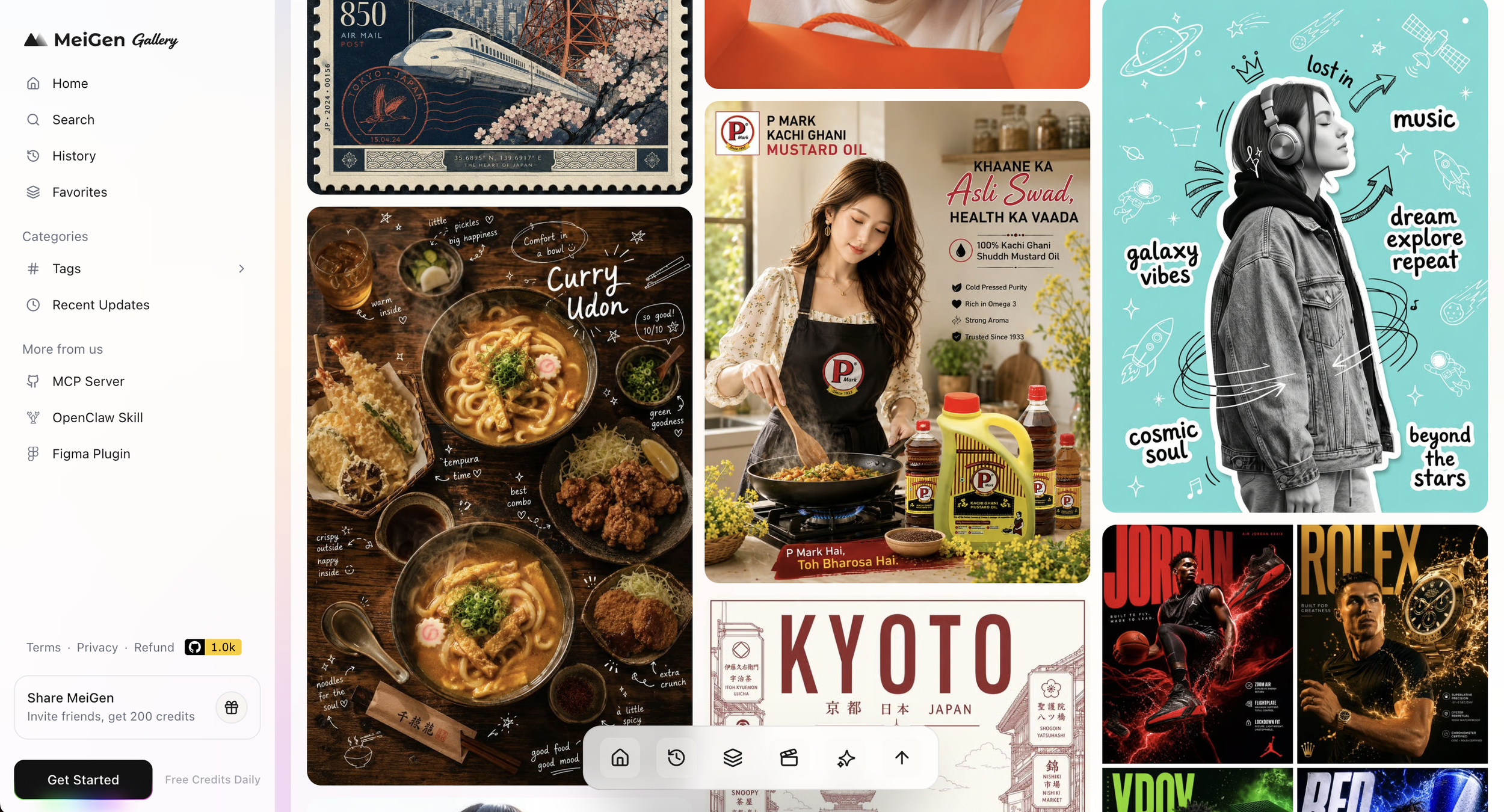
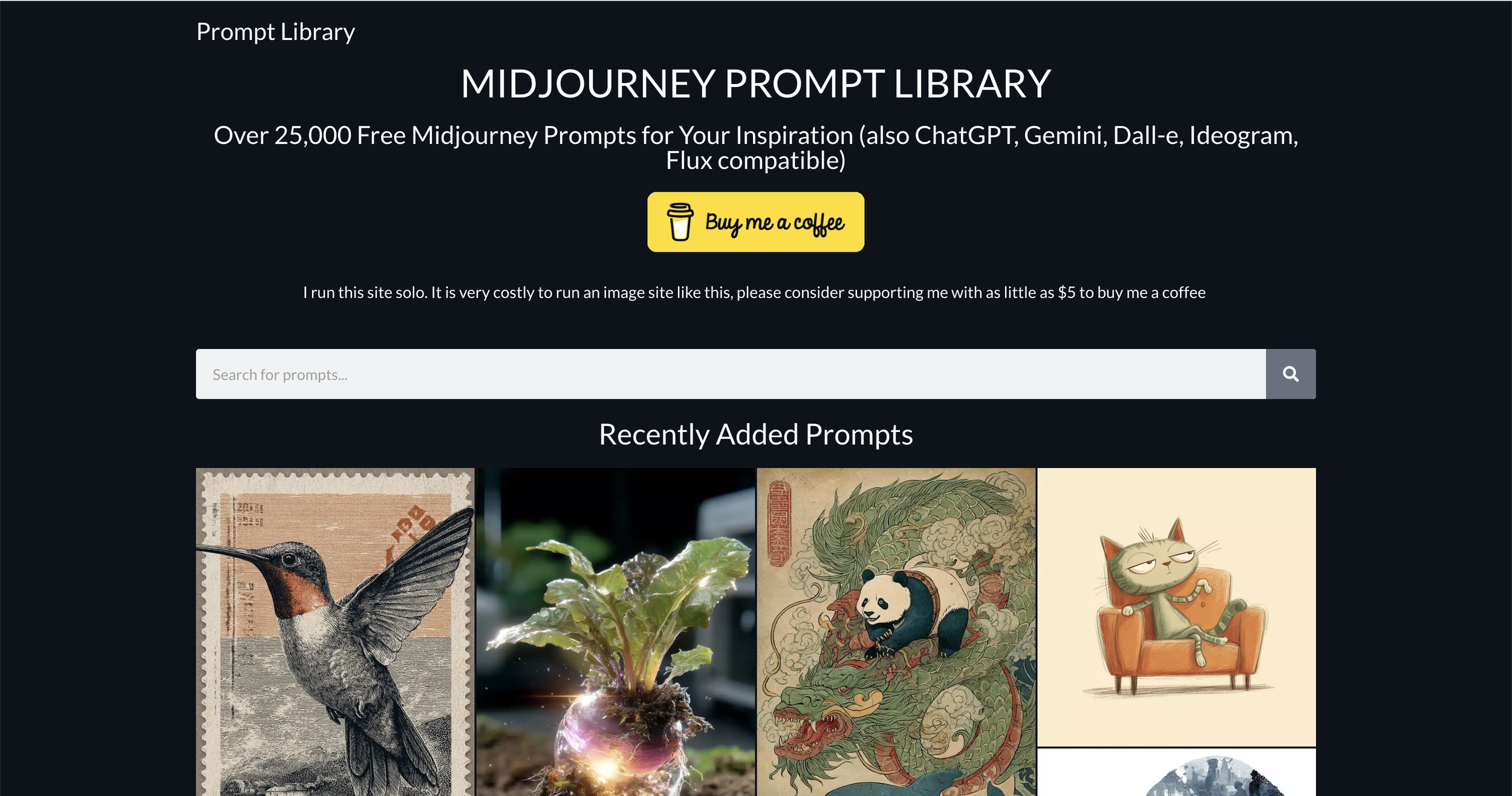
During ideation and prototyping, AI becomes a tool for exploration. It helps generate variations, test directions, and quickly visualize ideas. This expands the range of possibilities I can explore in a short time. But deciding which direction is meaningful, emotionally resonant, or aligned with user needs still depends on human intuition and judgment. AI expands the space of possibilities, but humans still define direction.
Rather than replacing creativity, AI expands the creative playground, while leaving decision-making and meaning-making in human hands.

Photo by Google DeepMind on Unsplash
Where AI Falls Short
At the core of design is user-centered thinking. Human needs, behaviors, emotions, and experiences are placed at the center of the process.
In the early discovery stage of design thinking, designers observe problems in society and human interactions, then use methods such as interviews, surveys, and testing to validate insights. This stage is fundamental, and it is also something AI cannot fully replace.
AI can help organize information or summarize data, but it cannot fully understand human context. It cannot feel hesitation in a user’s voice, or interpret the emotional weight behind frustration, or understand cultural nuance shaping behavior. These are subtle but critical parts of meaningful design insight.
Because of this, I don’t believe designers are becoming less relevant in the AI era. I believe the opposite is happening: human-centered thinking, empathy, and interpretation are becoming even more important.
At the same time, there is another shift happening in parallel.
When AI can generate content, visuals, and layouts instantly, it reminds me of the Industrial Revolution. Once machines enabled mass production, handmade and human-crafted work did not disappear - it became more valuable because of its uniqueness and authenticity.
We are starting to see a similar pattern in design today. Many AI systems are trained on large amounts of existing data, which means their outputs often lean toward the most statistically likely or “average” solution. As a result, many digital products, websites, and visual styles are beginning to feel increasingly similar.
This idea is reflected in the iF Design Trend Report 2026, where Naoki Tanaka mentions that AI tends to “average out humanity’s vast history of ideas and outputs.” I find this perspective especially meaningful because it explains why AI-generated work can feel polished, yet strangely familiar at the same time.
But brands do not want to be average. They want to be remembered. They want emotional connection, personality, and a distinct identity. This is why designers spend time shaping brand systems, defining tone, and building differentiation, rather than simply optimizing toward similarity.
Because of this, I believe originality and authentic creativity may become even more valuable in the AI era. If we rely entirely on AI-generated outputs, creative work risks becoming repetitive and homogenized. But when AI is used as a tool for exploration rather than final decision-making, it can help expand ideas while still preserving human perspective and individuality.
Perhaps this is why the conversation around AI is not only about technology, but also about redefining what human creativity and design value truly mean.
From Execution to Meaning
As a designer, I’ve always seen design as a bridge: connecting brands with users, but also connecting different teams such as developers, stakeholders, and business goals. With the rapid rise of AI tools, I believe this bridging role is becoming even more important.
We are no longer only designing interfaces. Increasingly, designers are also helping users understand how to interact with AI systems, while supporting companies in building AI-powered experiences that still feel intuitive, accessible, and human-centered.
Ironically, as AI becomes more capable, genuinely human thinking and creativity may become even more valuable.
Because of this, when I receive a design brief or begin exploring a new idea, I intentionally try to start the process on my own first. I take time to think, observe, research, and brainstorm before immediately turning to AI tools. For me, AI is not the starting point of creativity, but a support system that expands and challenges my thinking rather than replacing it.
Looking at design history, this shift does not feel entirely new. Whenever new technologies emerge, design evolves alongside them. When phototypesetting replaced metal type in the 1950s, typography did not disappear—it opened the door for designers like Herb Lubalin to experiment with entirely new forms of visual expression. In many ways, design history has always been shaped by the relationship between humans and new tools.
And perhaps that is what we are experiencing again today.
As AI continues to reshape creative workflows, I do not think the value of designers will disappear. Instead, I believe the focus of design will gradually shift further toward interpretation, empathy, originality, and meaning-making, the parts of creativity that remain deeply human.